Rhyme Scheme: Types, Examples, and How to Find the Pattern
A practical guide to reading the letters behind a poem's sound, comparing common patterns, and choosing a scheme that supports your own lines.

In this guide
A rhyme scheme is the pattern created by the sounds at the ends of a poem's lines. Readers often write the pattern with letters: lines that rhyme share a letter, while a new end sound receives a new letter. That small notation turns a poem's sound into something you can inspect.
The most useful way to study a rhyme scheme is not to memorize a list of labels. Look at what the pattern does. AABB can sound tidy and songlike, ABAB can create forward motion, and an irregular or absent pattern can keep attention on image, voice, or natural speech.
Quick answer
To find a rhyme scheme, compare the final stressed sounds of each line, give the first sound the letter A, and use the same letter whenever that sound returns. Four lines ending in matching, different, matching, different sounds follow ABAB.
Try the AI Rhyme GeneratorWhat is a rhyme scheme?
A rhyme scheme is the organized pattern of rhyme across the lines of a stanza or poem. It focuses on the sound listeners hear at the line ending, rather than the spelling of the final word. For example, light and night usually belong to the same rhyme family even though their spellings are different.
The word scheme does not mean that every poem must follow a strict plan. Free verse may have no repeating end-rhyme pattern, while a sonnet, limerick, or ballad often uses a recognizable one. Some poets also begin with a pattern and then change it to mark a turn in thought or emotion.
Rhyme is about sound
Do not group words only because they look alike. Compare the sound from the last stressed vowel onward, and treat near rhyme as a deliberate choice when the match is close but not exact.
How the letter notation works
Letter notation is a compact way to map repeated end sounds. Start at the first line and call its end sound A. If the second line ends with a different sound, call it B. If the third line returns to the first sound, it is A again. Continue until the stanza has a visible sequence.
The letters do not judge whether a rhyme is perfect, slant, visual, masculine, or feminine. They simply show which line endings the reader is meant to hear as connected. Add a short note beside the pattern when the poem changes scheme between stanzas.
- Read the line endings: Say the final stressed word in each line aloud instead of relying on spelling.
- Name the first sound: Give the first ending the letter A.
- Compare the next lines: Reuse a letter for a matching sound and assign a new letter to a new sound.
- Write the sequence: Place the letters in order, such as AABB, ABAB, or ABCB.
Common rhyme scheme types and examples
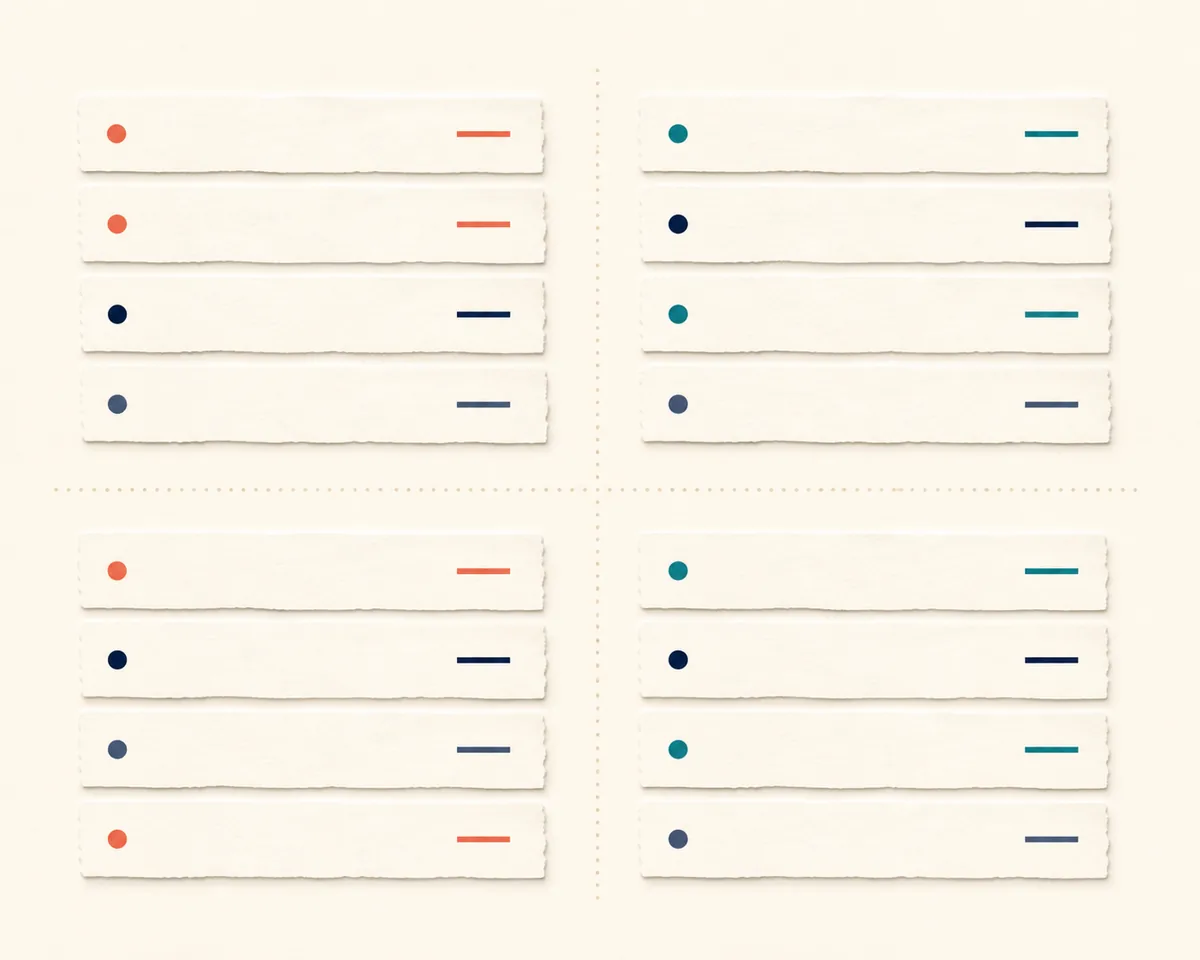
The patterns below are useful reading shortcuts. They describe four-line units, but a poem can extend, repeat, interrupt, or adapt them. A scheme is strongest when it supports the poem's voice and movement rather than forcing every line to end with an obvious rhyme.
When you write your own example, draft the meaning first and then test possible end sounds. If the rhyme makes the sentence unnatural, move the line break, change the syntax, or choose a different pattern.
| Pattern | Line relationship | Typical effect |
|---|---|---|
| AABB | The first pair rhymes, then the second pair rhymes | Tidy, memorable, often songlike |
| ABAB | The first and third lines rhyme; the second and fourth rhyme | Alternating motion and a balanced turn |
| ABBA | The outer lines rhyme around a middle pair | Enclosure, return, or reflective feeling |
| ABCB | The second and fourth lines rhyme | A loose ballad-like pulse with room to move |
| AAAA | Every line shares the same end sound | Insistence, chant, comedy, or deliberate excess |
| ABCD | Each line has a different end sound | Open texture or a transition away from end rhyme |
Pattern is not the same as meter
Rhyme scheme tracks repeated end sounds. Meter tracks the rhythm of stressed and unstressed syllables. A poem can have a regular rhyme scheme with loose meter, or regular meter with little end rhyme.
Rhyme schemes in common poetry forms
Some forms are recognized partly by their rhyme expectations. The pattern is a starting map, not a cage: different traditions, translations, and individual poems may use variations. Reading the form's whole structure is more reliable than checking one isolated stanza.
If you want to hear these patterns in practice, pair this guide with a focused form tool. A sonnet generator can help you plan a closing couplet, while a limerick generator makes the AABBA relationship visible as you draft.
| Form | Common pattern or tendency | What to notice |
|---|---|---|
| Shakespearean sonnet | ABAB CDCD EFEF GG | Three quatrains lead to a rhyming couplet |
| Limerick | AABBA | The long opening pair frames a shorter middle pair |
| Ballad stanza | Often ABCB or an ABAB variant | The second and fourth lines often carry the beat |
| Haiku | Usually no fixed end-rhyme scheme | Image, pause, and syllable pattern do more of the work |
| Free verse | No required repeating scheme | Sound can come from rhythm, consonance, or internal rhyme |
How to identify a poem's rhyme scheme
Identifying a scheme is easiest when you separate sound from meaning. Read a stanza once for the idea, then read only the line endings aloud. Mark the final stressed sounds, not every similar-looking spelling, and listen for slant rhymes that are intentionally close rather than identical.
A poem may use one scheme for every stanza, a new scheme in each section, or a repeated refrain that creates its own pattern. Record the pattern stanza by stanza when the poem is long. That prevents an early ABAB section from hiding a later change.
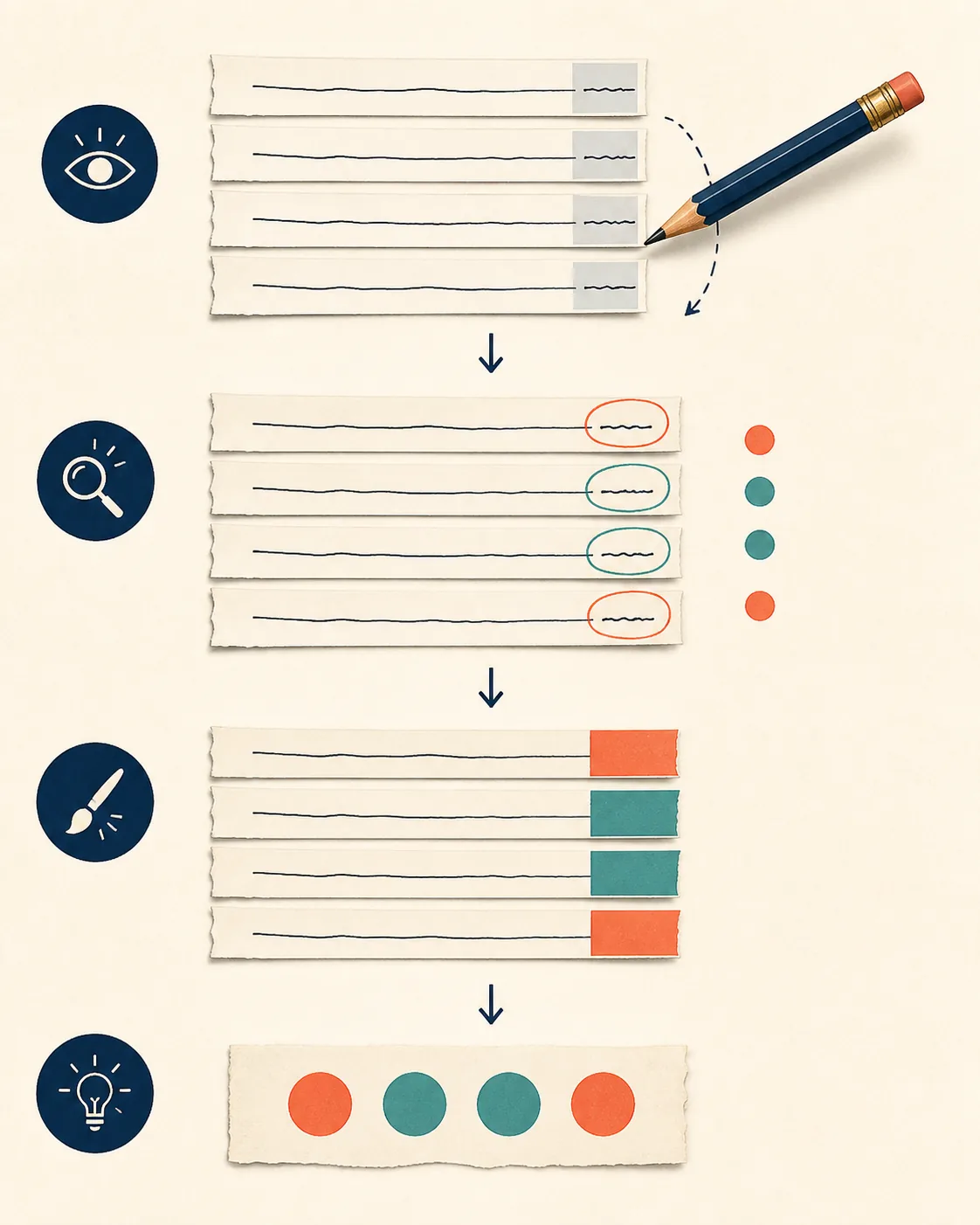
- Read aloud: Use your ear to compare the final stressed syllables in each line.
- Ignore spelling traps: Words that look similar may sound different, and words with different spellings may rhyme.
- Mark repeated sounds: Use the same letter for a returning sound and a new letter for a new sound.
- Check the unit: Write the pattern for the stanza, then compare it with the next stanza or refrain.
How to choose a rhyme scheme for your poem
Choose a pattern based on the kind of movement you want. AABB can make a short greeting, joke, or children-friendly poem feel easy to follow. ABAB creates a conversation between alternating lines. ABBA can make the middle feel held inside a larger thought. ABCB gives you a clear anchor without making every line sound paired.
You can also start with a form instead of a scheme. If your subject needs room for natural speech, try free verse or a loose ABCB pattern. If the occasion wants ceremony, a sonnet-like sequence or a controlled couplet may provide the right amount of structure.
- Match the voice: Conversational writing usually benefits from flexible rhyme; playful writing can tolerate stronger repetition.
- Protect the image: Never replace the most precise image with a weaker word just to complete a pattern.
- Vary the pressure: Let a stanza resolve, loosen, or break the expected scheme when the meaning turns.
- Read it aloud: A pattern that looks elegant on the page still needs to sound natural in the mouth.
How to write a poem with a rhyme scheme
A reliable drafting method is to choose the emotional job of the stanza before choosing the end words. Write four plain lines about one image, underline the last stressed word in each line, and test whether a pattern appears naturally. If not, decide whether the poem needs a pattern or whether the looseness is part of its voice.
For a more controlled draft, write a small bank of exact and near rhymes before revising the lines. Use the bank as a menu, not a requirement. The final version should sound as if the speaker chose the words for meaning first and rhyme second.
- Choose the unit: Start with a couplet, quatrain, or refrain rather than planning an entire long poem.
- Draft for meaning: Write the clearest version of the thought before polishing line endings.
- Select the pattern: Test AABB, ABAB, ABBA, or a looser scheme against the draft.
- Revise by ear: Read the stanza aloud and remove any rhyme that sounds forced, vague, or distracting.
A useful prompt
Write a four-line poem about one concrete image. Try ABAB first, then rewrite it as AABB. Compare how the same idea changes when the rhyme pressure moves.
Rhyme scheme frequently asked questions
Helpful references
- Poetry Foundation: Rhyme glossary entry — A reference for rhyme, sound relationships, and related poetic terms.
- Academy of American Poets: Rhyme Scheme — A concise reference for reading and naming a poem's rhyme pattern.
Start with one four-line stanza
Pick one concrete image, draft four honest lines, and test two different patterns aloud. Keep the version whose sound strengthens the idea instead of covering it up.