Acrostic Poem Examples: 15 Ideas and How to Write One
A practical guide to the first-letter poetry pattern, with examples for names, classrooms, cards, seasons, and everyday creative writing.


On this page
Looking for acrostic poem examples? An acrostic is a poem built around a hidden word pattern: the first letters of the lines spell a name, topic, feeling, or short phrase. That simple constraint makes acrostics useful for gifts, classroom activities, journal writing, and quick creative warm-ups.
The best examples are not just lists of words that happen to start with the right letters. Each line should add an image, action, memory, or feeling. This guide gives you 15 starting ideas, five expanded mini-examples, and a five-step method for writing an acrostic that feels personal rather than forced.
The short answer
Start with a word that matters, write one line for each letter, and make every line contribute a concrete detail. Acrostic poems do not have to rhyme. If you want a faster first draft, use the Acrostic Poem Generator, then check the vertical letters and revise the lines in your own voice.
Try the acrostic generatorWhat is an acrostic poem?
An acrostic poem is a form in which a chosen set of letters creates a second message when read vertically. In the most common version, the first letter of each line spells the key word. For example, the word HOPE can become four lines beginning with H, O, P, and E. The poem can be serious, funny, descriptive, or written for a child.
The pattern is a framework, not a complete formula. You can write one line per letter, use several lines for a longer letter, or experiment with the final letters of lines. A double acrostic hides messages at both ends. For a beginner, the first-letter version is easiest to read and easiest to check.
An acrostic also differs from a simple list. The lines should connect through a scene, tone, or idea. If the word is SPRING, the poem might move through light, rain, soil, and new leaves instead of giving five unrelated definitions.
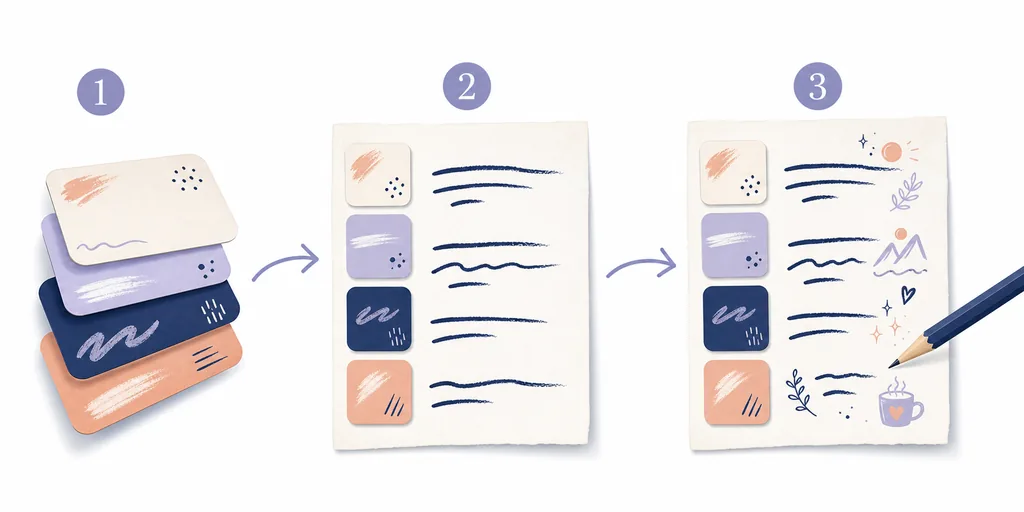
- First-letter acrostic: The first letter of each line spells the chosen word. This is the clearest format for names, cards, and school projects.
- Telestich: The final letters of the lines create the hidden word. It is a good variation when the line endings are more important than the openings.
- Double acrostic: The first and last letters work together. Use it as an experiment after the basic pattern feels comfortable.
- Rhyme is optional: An acrostic can use rhyme, free verse, or a conversational tone. Meaning and readable lines matter more than forcing a rhyme at every step.
15 acrostic poem ideas and examples
Choose a word that gives you a clear emotional or visual direction. Short words are easier to control, while longer words give you more room for a story. The ideas below work as complete subjects, classroom prompts, or starting points for an AI-assisted draft.
For a finished poem, add details that could belong only to your speaker: a cracked mug, a bus route, a nickname, a particular color of sky, or a line someone actually said. Those details turn an acrostic from a letter exercise into a poem.
| Word or theme | Use case | Direction for the lines |
|---|---|---|
| NAME | Personal gift | Give each line one quality, memory, or image connected to the person. |
| LOVE | Card or anniversary | Balance a feeling with one specific shared moment instead of only praise. |
| FRIEND | Thank-you note | Move from a small memory to what the friendship makes possible. |
| FAMILY | Home or heritage | Use sensory details such as food, rooms, voices, and traditions. |
| SPRING | Seasonal poem | Follow changes in light, weather, plants, and daily energy. |
| NATURE | Classroom activity | Give each line a different natural image and one active verb. |
| OCEAN | Descriptive writing | Mix movement, sound, color, and the human feeling of distance. |
| DREAM | Journal prompt | Let each line move between a scene, a desire, and a question. |
| COURAGE | Motivational poem | Show a small action taken despite fear; avoid vague slogans. |
| HOME | Relocation or memory | Describe what makes a place feel safe, familiar, or missed. |
| RAIN | Five-senses exercise | Use sound, texture, smell, reflected light, and temperature. |
| MUSIC | Creative warm-up | Turn rhythm, instruments, silence, and memory into images. |
| TEACHER | School appreciation | Name a lesson, a gesture, and a way the teacher changed your view. |
| AUTUMN | Seasonal card | Use falling leaves as a doorway to change, time, or gratitude. |
| HOPE | Short reflective poem | Keep the language quiet and concrete: light, hands, doors, or footsteps. |
Five mini-examples to study
NATURE can begin with “Night gathers softly,” “Air turns cool,” “Trees trade shade,” “Under leaves, small worlds wait,” and “Rain edits the path.” Notice that the lines do not define nature; they create a moving scene. For SPRING, let “Soft light returns” lead into “Petals loosen,” “Rain fills the garden,” “Insects wake,” “New green climbs,” and “Gentle mornings last longer.” The exact wording can change—the important part is the vertical pattern and the concrete image in each line.
How to write an acrostic poem in five steps
Writing an acrostic becomes easier when you separate the letter problem from the poetry problem. First secure the pattern. Then revise for sound, image, and emotional direction. Do not judge the first draft as if it were the final poem.
If you are writing for a child or student, begin with a word they already understand. If you are writing a card, choose a name, place, or value that the recipient will recognize. A personal word gives you better material than a random long word.
- Choose the spine word: Pick a name, topic, season, feeling, or short phrase. Check that you can say something meaningful about every letter.
- Collect rough language: Write two or three possible words or images for each letter. Do not force complete lines yet; gather material first.
- Draft one line per letter: Put the strongest idea beside each letter. Let the line lengths vary if that makes the poem sound more natural.
- Connect the scene: Read the lines in order and add a shared setting, time, speaker, or emotion so the poem does not feel like a random list.
- Check and revise: Read the first letters vertically, remove filler words, replace generic praise with details, and decide whether rhyme actually helps.
Does an acrostic poem have to rhyme?
No. Rhyme is optional, and many strong acrostic poems use free verse. Because the first letters already impose a constraint, forcing an end rhyme can make the language sound unnatural. Start with clear images and a consistent voice. Add rhyme only when it arrives easily.
Line length is flexible too. A one-word line can create emphasis, but a complete sentence may be better when the letter is difficult. Read the poem aloud and listen for repeated sounds, awkward grammar, and places where the hidden word disappears behind unnecessary decoration.
A useful final test is to remove the starting letters mentally. Would the lines still feel like a tiny poem? If the answer is no, add a stronger image, a more precise verb, or one detail from real life. The acrostic pattern should support the writing, not replace it.
- Replace generic praise: Instead of “Amazing and kind,” show the person leaving the last slice of cake or remembering a difficult day.
- Use verbs: Verbs such as folds, waits, carries, opens, and returns create movement in short lines.
- Keep the letter visible: Avoid an introductory quotation mark or decorative symbol before the required letter if the pattern needs to be checked quickly.
- Edit for the reader: A classroom poem can be simple; a card can be warm; a journal poem can be more surprising. Match the vocabulary to the person who will read it.
How to use acrostic poems for kids, cards, and class projects
For kids, use familiar words such as FRIEND, CAT, SUMMER, or KIND. Ask the writer to draw one picture for each line before choosing the final wording. This keeps the activity connected to observation instead of turning it into a spelling worksheet.
For a card, avoid making every line a broad compliment. One remembered detail will often feel more generous than five adjectives. A name acrostic can mention a shared place, a habit, a joke, or a hope for the next year.
For a class project, compare the different poems created from the same word. Students can underline the first letters, circle concrete nouns, and revise one line that feels too general. The same activity works for vocabulary review, seasonal writing, or an introduction to poetic form.
| Reader or occasion | Best starting word | Helpful constraint |
|---|---|---|
| Young writer | CAT, SUN, FRIEND | Use simple verbs and one sensory detail per line. |
| Birthday card | A name or LOVE | Include one real memory and keep the tone warm. |
| Teacher appreciation | TEACHER or THANKS | Mention a specific lesson or gesture. |
| Seasonal display | SPRING, AUTUMN, WINTER | Move through changes in light, weather, or color. |
| Creative warm-up | DREAM, RAIN, MUSIC | Write quickly for five minutes before revising. |
Using an AI acrostic poem generator without losing your voice
An AI tool can help when one letter is blocking the draft. Give it the exact spine word, audience, tone, and a few personal details. “Write an acrostic for MAYA about a rainy train ride; keep the language gentle and use one image of a yellow coat” is more useful than “write a poem about Maya.”
Treat the generated poem as a starting draft. Verify that every line begins with the intended letter, remove details that are not true, and replace the most generic line with something you would actually say. For school work, follow the assignment rules and make sure the final version reflects your own thinking.
Our Acrostic Poem Generator can create a first pass for a name, theme, card, or classroom word. You can then return to this examples guide to check the pattern, or explore poem ideas when you need a different subject.
A three-question revision check
Does the vertical word spell correctly? Does every line add a new image or action? Would a real reader recognize the person, place, or feeling behind the poem? If one answer is no, revise that line before polishing the rest.
Acrostic poem examples FAQ
References
- Poetry Foundation: Acrostic - A concise reference for the form and its hidden-letter pattern.
- Wikipedia: Acrostic - Background on acrostics and related literary uses.
Start with one meaningful word
Choose a name, memory, season, or feeling. Write one possible line for each letter, then keep the details that sound most like you.